
Jelena Petrović
Someone is looking for a place for lunch in your neighbourhood. Someone needs a hair salon close to work. Someone checks how late a shop is open before they set out to buy.
In those moments, the first encounter with your business can be on Google. The person looks at photographs, checks opening hours, reads a few reviews and decides whether to call you, look for more information, or come in.
Your restaurant, salon or shop may have an excellent offer. A Google Business Profile helps people discover it and get the information they need in order to choose you.
What is a Google Business Profile, and do you pay for it?
Google Business Profile is a free tool for managing information about your business in Google Search and on Google Maps.
On it, people can find the address, opening hours, phone number, a link to the site, photographs and reviews. Depending on the category and the functions available, you can also present services, a menu or booking information.
It is important to distinguish the existence of a profile from managing it. Your business may already appear on Maps even if you did not open the profile yourself. So first check whether it exists, then claim it and complete the required verification.
You do not pay Google to use the profile. If you engage an agency to set it up and maintain it, you pay for that service.
Google has become the new high street

When someone searches “restaurant in Vračar” or “hair salon nearby”, they are in practice browsing what the neighbourhood has to offer. They look at where you are, what you offer, how the space looks and what other people’s experiences have been.
Your Google Business Profile then acts as a digital shop window. It can attract attention, answer important questions and prompt the person to call you or visit.
There is a difference between someone who searches the name of your business and someone who is only looking for where to have lunch, book a haircut or make a purchase. The first already knows you. The second is still choosing.
That is precisely where the opportunity opens for new guests, clients and customers to find you.
Three main factors influence how businesses appear, and in what order, in local results:
- Relevance: how well your business matches what the person is looking for.
- Distance: how far your location is from the person searching.
- Prominence: how well known the business is, with signals such as links from other sites, the number of reviews and the rating.
Complete, accurate information helps Google understand what you do and which searches your business is relevant for. A well-kept profile does not, however, guarantee first place. Results also depend on the specific search and the user’s location. A Google Business Profile is part of a wider story about how people find you online. If you also want to improve the visibility of your site, see how we approach SEO, AEO and GEO.
Trust is built before the first visit
One of the most important things a good Google Business Profile provides is a sense of security.
When someone sees photographs of the space, up-to-date information and other people’s concrete experiences, it is easier to judge whether your offer matches what they are looking for.
A restaurant guest may want to look at the menu and see whether the atmosphere suits them. A salon client wants to get to know the services and look at photographs of the work. A shop customer needs to find the entrance and check whether they will arrive before closing.
These are small, practical doubts that can decide whether someone comes.
Imagine a person who arrives at your shop because Google says you are open, and finds the door closed. The first impression is already damaged, before they have even seen the offer.
That is why accurate data are also part of looking after the customer. They show that you think about their time and their experience.
Reviews show what people can expect
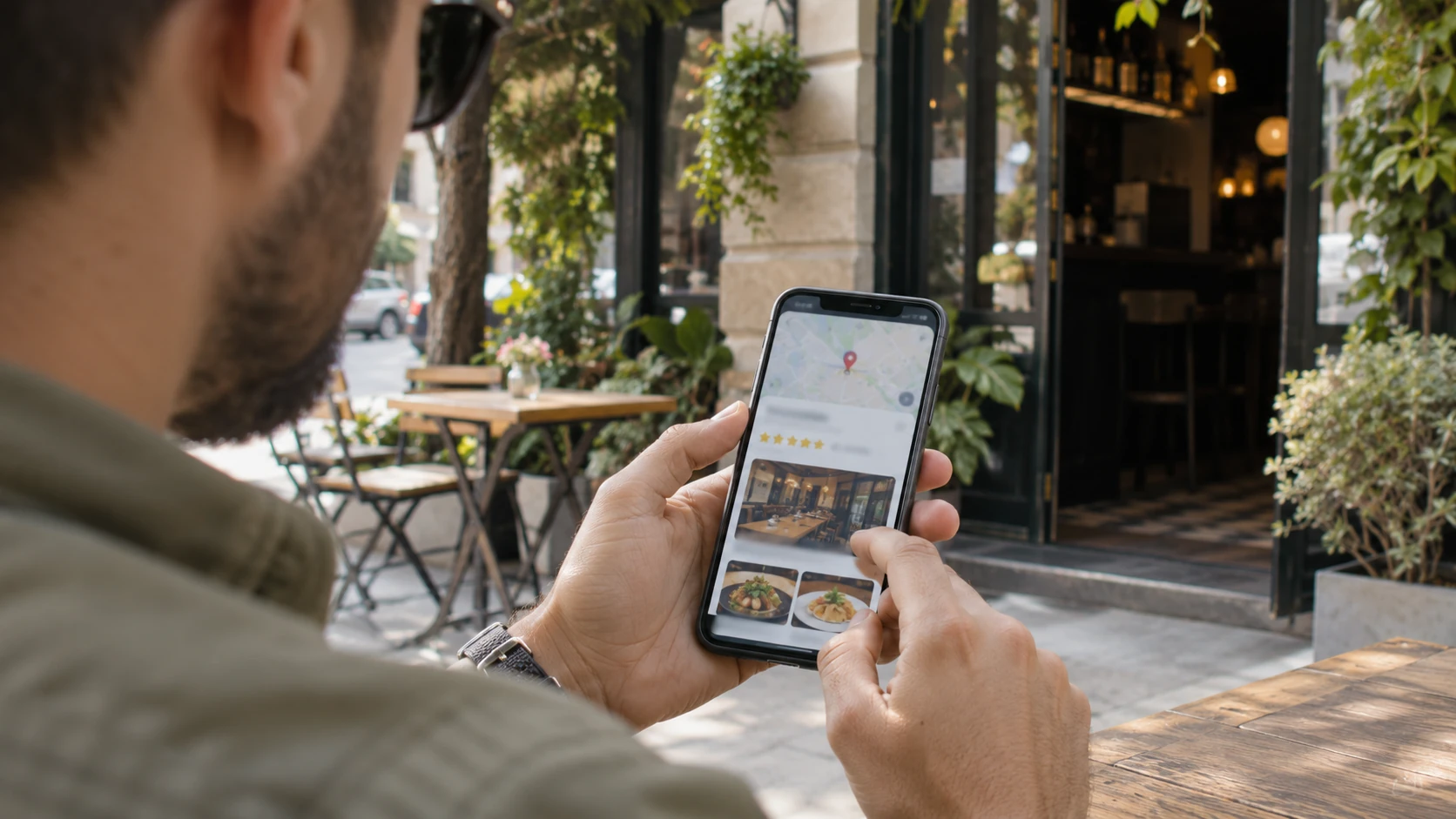
A recommendation has always played an important role in choosing a restaurant, a salon or a shop. On Google that recommendation is public, and available even to people who do not know your customers.
The overall rating gives a quick overview, while specific comments help a person understand what kind of experience they can expect. For some, kindness matters most; for others, the quality of the service; for others, respect for a booked appointment.
How you reply to reviews also matters. A personal reply to praise, and a calm, useful response to criticism, show how you communicate and how you solve problems.
Every reply does not need to be long. What matters more is that it relates to the concrete experience, and does not sound like the same message copied to everyone.
You can make it easier for customers to leave a review with a direct link or a QR code. Invite them to share an honest experience, without making a rating a condition. Google prohibits gifts, discounts and other incentives in exchange for reviews.
What should a well-kept Google profile contain?
Before extra posts and new photographs, check that the basics are in place.
- The accurate name and the right category. Use the name you actually trade under, and the category that best describes your main activity.
- A precise address and pin on the map. Check that navigation leads to the right place.
- Up-to-date opening hours. Also enter special hours for holidays and temporary changes.
- A working phone number and a link to the site. Check that the contact works, and that the link leads to the right page.
- Photographs that show the real state of things. Show the entrance, the space, the offer and details that help people recognise and get to know your business.
- Information about the offer and the services. Fill in the relevant fields available for your category.
- Replies to reviews. Pay attention to questions, praise and remarks you can usefully answer.
Also check that the data match the site and social media. If Instagram says you are open until 21:00, and Google until 20:00, the user has to discover for themselves which information is true.
Maintaining the profile does not have to mean posting every day. What matters is that changes in the business become visible on the profile in time.
How do you know whether the profile is delivering results?
Alongside how the profile looks, also follow what people do when they find it.
In the performance data of a verified profile you can track information such as:
- the searches through which the profile appeared;
- clicks on the link to the site;
- clicks on the call button;
- requests for directions to your location.
The data available depend on the profile and its functions.
How you interpret them also matters. A click on the call button does not confirm that a conversation took place. A request for directions does not confirm that the person actually arrived.
So look at these indicators together with enquiries, bookings and information you receive from customers. A simple question — “How did you hear about us?” — can complete the picture you see in the statistics. On other channels, too, it is important to distinguish audience attention from concrete business results. We wrote about that in The difference between content that works for the algorithm and content that works for the business.
The Google profile, the site and Instagram should work together
The path to your business can begin in different places.
Someone will first see a photograph of a dish on Instagram, then check the location and reviews on Google. Someone will find you on Maps, then go to the site to read more about the services.
That is why information should be aligned, and the next step simple. Social media management should follow the same direction: present your offer, answer the audience’s questions and make contact easier.
If a person wants to look at the menu, they should find it easily. If they want an appointment, they should understand how to book it. If they are coming for the first time, an accurate location and a photograph of the entrance can make arrival easier.
Each of those details contributes to the overall experience of your brand.
Look at your business through the eyes of a future customer
Find your business on Google and look at the profile as if you were hearing about it for the first time.
Is it clear what you offer? Is the information accurate? Do the photographs show how the space looks today? Can someone easily call you or find the way?
The answers will show you what already works well, and where there is room to improve.
Long before someone sits down in your restaurant, books an appointment or walks into the shop, they are already forming an opinion of you. A well-kept Google Business Profile helps that first impression rest on accurate information and on what you actually offer.
Want to check how easy it is to find and choose your business online? Get in touch with the PinPoint team. We will look at your digital presence and propose concrete steps to improve it. Get in touch
Written by: Jelena Petrović · LinkedIn
All articles